

In Memory
Reed Pyeritz
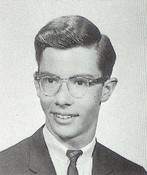
REED PYERITZ NOVEMBER 2, 1947 AUGUST 10, 2026
Reed E. Pyeritz, MD, PhD, a pioneering medical geneticist whose research helped transform the diagnosis and treatment of Marfan Syndrome and other inherited cardiovascular disorders, died on August 10, 2026, at age 78.
During his career, Dr. Pyeritz combined the rigor of a scientist with the compassion of a physician, aided by the curiosity of a lifelong student. He believed that science was a means of improving human lives. Throughout his life he was a professor, mentor, author, soldier, endurance athlete, yet above all else, his most cherished roles were as a devoted husband, father, grandfather, brother, uncle, and friend.
Born in Pittsburgh on November 2, 1947, and raised in Mt. Lebanon, Pennsylvania, Dr. Pyeritz developed an early fascination with science. As a boy, inspired by the beginnings of the American space program, he built rockets in his backyard and once gave his father a list of chemicals to purchase from Fisher Scientific for his experiments. That combination of curiosity, imagination, and hands-on experimentation remained a defining characteristic throughout his life.
He graduated from Mt. Lebanon High School in 1965 and received an S.B. in Chemistry from the University of Delaware in 1968. He earned an A.M. and PhD in Biological Chemistry from Harvard University in 1972 and his MD from Harvard Medical School in 1975. He subsequently trained in internal medicine and medical genetics, joining Johns Hopkins under the tutelage of the late genetics pioneer, Dr Victor McKusick. After a decade back in Pittsburgh, Dr Pyeritz joined the University of Pennsylvania (Penn) faculty in 2001, where he spent 20 years.
At Penn, he became the William Smilow Professor of Medicine and Genetics and later Professor Emeritus of Medicine in Translational Medicine and Human Genetics. His scientific work focused particularly on inherited cardiovascular diseases, including disorders affecting the aorta and connective tissue, as well as the ethical, legal, and social implications of human genetics.
His most enduring scientific legacy was his work on Marfan Syndrome, a genetic disorder that can cause life-threatening enlargement and dissection of the aorta. In 1991, Dr. Pyeritz and colleagues helped establish that alterations in the fibrillin-1 gene cause Marfan Syndrome, a discovery that greatly improved diagnosis and the ability to identify affected family members. His clinical research also helped establish treatments that reduced the risk of aortic complications. The cumulative work of Dr. Pyeritz helped dramatically extend the life expectancy of people living with Marfan Syndrome for generations to follow.
His commitment to patients extended well beyond the laboratory. In 1979, while at Johns Hopkins, he organized a small gathering of patients, family members, and physicians affected by Marfan syndrome. That group eventually grew into the Marfan Foundation, now an international organization supporting patients, families, education, advocacy, and research.
Dr. Pyeritz was also one of the founders of the American College of Medical Genetics, established in 1991, and served as its second president. He served as chair of the University of Pennsylvania Faculty Senate in 2015 and held numerous leadership positions in academic medicine. His bibliography ultimately exceeded 700 publications, and he was a co-editor of the standard reference work Emery and Rimoin's Principles and Practice of Medical Genetics and Genomics.
His accomplishments were recognized with numerous honors, including most recently the 2023 David L. Rimoin Lifetime Achievement Award in Medical Genetics and the Marfan Foundation's Lifetime Achievement Award. Yet Reed Pyeritz never regarded science as a finished enterprise. His final book, Uncertain Precision: Managing Health Care with Personalized Technologies, published in 2026, examined the promise and limitations of genomics, personalized medicine, artificial intelligence, and other emerging technologies. The title reflected a principle that had guided his career: uncertainty is not the enemy of science; it is what makes science necessary.
For Dr. Pyeritz, the unanswered question was an invitation rather than a barrier.
He brought that same spirit to the rest of his life. He served as a Lieutenant Colonel in the U.S. Army Reserve Medical Corps, including active duty during Operation Desert Storm. Outside medicine, he was a serious endurance athlete, running a 2:51 Boston Marathon, competing as a nationally ranked masters triathlete, and participating in a Guinness World Record 100-man, 100-mile relay with the Baltimore Road Runners Club.
His greatest source of joy, however, was his family.
He met Jane Tumpson in first grade, and they later attended Mt. Lebanon High School together. They married and shared more than five decades of life together. He is survived by Jane; their daughters, Allyson Colaco and Abigail Hopkins; grandchildren Penelope and Tallulah.
His younger brother, Eric "Rick" Allen Pyeritz, preceded him in death in 2025. Reed had described Rick as "a good doctor, a better man, and the best of brothers."
Dr. Pyeritz understood that a life cannot be measured solely by what one accomplishes. It is measured by what one gives, what one learns, whom one loves, and what one leaves behind in others.
He was intensely curious about the world, but never too busy to be curious about people. He valued evidence without losing his sense of wonder. He embraced technology without surrendering his skepticism. He believed in progress while understanding that progress requires humility.
And he believed that to live fully, you had to explore everything.
Perhaps the best description of his philosophy comes from the scientist himself. In his writing, Dr. Pyeritz returned repeatedly to the idea that uncertainty is an essential part of life and scientific discovery. We do not know everything. We never will. But that is not a reason to stop asking questions. It is a reason to keep learning.
That spirit propelled Dr. Pyeritz from the boy building rockets in Pittsburgh to the physician standing beside families facing inherited disease; from the marathon course to the genetics laboratory; from military service to the classroom; and, ultimately, to the pages of the book that filled bookshelves.
He leaves behind an extraordinary scientific legacy, but an even more personal one: a family that loved him, patients whose lives were changed because of his work, students who learned from his example, colleagues who valued his friendship, and generations yet to come who will benefit from discoveries to which he contributed.
Dr. Pyeritz spent his life pursuing what was not yet known.
He never stopped believing that there was more to discover.
And that may be the most fitting legacy of all.
https://docs.google.com/document/u/0/d/1-hl78-DCLLi-3qzyua-tmtOAiiDUtQlp7-U9LiG_S78/mobilebasic
Al Whitehouse
No class reunion was complete without JET & Reed. To use the word "distinguished" would undersell Reed's accomplishments in all aspects of his life. His life summary is both impressive and astounding. May his llife memories comfort his family and friends as they sort his passing. Peace.
Susan L Fleming (Morgans)
Reed was one of my dearest friends in high school and we always kept in touch, although not as regularly as good friends should. I was so happy when he and Jane got married and later when they moved back to Pittsburgh(before being recruited away again). It was hard for me to imagine how well-respected, even famous Reed was in the worlds of science and medicine. Perhaps it was becausr despite his intellect and remarkable education and achievements, he was always so humble, friendly, kind and interested in others. Reed was truly a remarkable human being who has left the world a better place. My deepest sympathy to Jane, his daughters and their families.
William S Stark
From Bill and Sharon (Nolte) Stark, also married high school sweethearts, our heartfelt sympathies go out to Janie. I (Bill) was in AP math with an elite group of 12, so I always found myself surrounded by students much more brilliant than myself, and Reed was one of them. I had a scholarly career, but hardly anyone could match Reed's accomplishments. I had forgotten that we shared a passion for running. We will never forget him.
Elaine Silver-(Liberati)
Dear Jane and family , I was so moved reading about Reed’s extraordinary life. His brilliance, curiosity, dedication to his family, and remarkable accomplishments were truly inspiring. You and Reed were such an amazing couple, and I can only imagine how profound this loss must be. My heart goes out to you your children and grandchildren. Hugs
Richard L McMillan
Sorry to hear of Reed's passing. He certainly left his mark. A great classmate, a great teammate, and an extremely accomplished physician,/researcher/teacher. I am not surprised to read that, above all else, he was a great family man.
Michael D Roberts
I knew Reed from a distance. We explained pleasantries at a number if reunions. I recall Rick Hagelauer and Reed received prized awards at a senior year assembly, Rick for his outstanding baseball play and Reed for his brilliant academic performance. Reed remarked to Rick he wished he had received the athletic award. As I looked back years later I think what a shame we have, as a society, such misplaced priorities. Reed is one of Mt Lebanon's heroes. One of the greatest human beings our school has ever helped develop.Peter C Weaver
To Janie and the entire extended Pyeritz family, my deepest and warm condolences on the loss of Reed. Although we did not maintain contact post high school, the many shared experiences we had at the earlier time, are vivid reminders of the thoughtful and meaningful moments, the prankish and silly times, always rolled into a man of character and good will for whom I had great respect. May his legacy in all regards live on and shine brightly.